Alright, Founders: Master the Best LinkedIn Hooks to Stop the Scroll

sushakanaujia
Author
Forget all that fluffy corporate jargon you’ve been scrolling past. You know, the “thought leadership teamwork” posts that make your eyes glaze over faster than a bad pitch deck. Seriously, if you’re still kicking off your LinkedIn content with “In today’s ever-evolving digital ecosystem…”, you’re already losing.
Because here’s the thing: your target audience — whether they’re investors, future hires, or your first big customer — they’re wading through mountains of noise. Your post? It’s literally milliseconds to grab their attention before they keep scrolling to see what their aunt had for lunch. Harsh, I know. But it’s the truth.
And that’s why we need to talk about hooks. Not just any hooks, but the best LinkedIn hooks for founders – the kind that cut through the BS, make people stop scrolling, and actually care about what you’re building.
You’re probably thinking, “Susha, I’m busy building a company, not writing viral tweets.” I get it. But your personal brand on LinkedIn isn’t some side hustle; it’s a legitimate growth engine. Think about it: research shows companies with strong thought leadership attract 60% of decision-makers. Sixty percent! That’s huge. And founders who actively build their personal brand? They see a 30-40% bump in inbound opportunities. That’s real, tangible ROI.
So, let’s stop guessing and start hooking.
Why Your First Two Lines on LinkedIn Are Everything (and How to Nail ‘Em)
You know that dreaded “see more” button? Your entire message — your brilliant insights, your product updates, your urgent calls to action — lives behind it. Most people? They’re not clicking. Studies suggest only about 20-30% actually tap “see more.” That means 70-80% of your audience won’t even see your full message unless those first 2-3 lines are irresistible.
That’s your hook. It’s got to be punchy, thought-provoking, or plain shocking. It needs to create an immediate curiosity gap, promising immense value or a controversial take that demands further exploration. No pressure, right?
But it’s not just about clicks. It’s about engagement. LinkedIn’s algorithm loves engagement – likes, comments, shares, and especially saves. Posts with more initial engagement get more reach. It’s a flywheel, and the hook is what gets it spinning.
Forget “Clickbait.” Think “Curiosity Bait.”
We’re not talking about cheesy titles here. This is about real insights wrapped in an intriguing package. The goal? To make your ideal customer, investor, or recruit think, “Wait, what? I need to know more.”
So, how do the pros do it? Let’s learn from some founders who genuinely understand how to create engaging LinkedIn content.
Real Talk: How Top Founders Craft the Best LinkedIn Hooks for Serious Buzz
There’s a reason certain names pop up on your feed again and again. They’re not just posting; they’re executing a smart content strategy, often starting with a powerful hook.
1. Sahil Lavingia (Gumroad): The Vulnerability & Storytelling Power Up
Sahil Lavingia, the founder of Gumroad, isn’t just selling a platform; he’s sharing a journey. He’s famously transparent about his entrepreneurial highs and brutal lows. His LinkedIn hooks for founders often start with an honest admission or a counter-intuitive observation drawn directly from his experience.
- Example Hook Style: “Building Gumroad for 10+ years taught me that ‘overnight success’ is a myth. Here’s what almost killed us in year 3, and the data point that saved everything…”
- Why it works: It’s raw. It’s relatable. It taps into the shared struggle of founders. People aren’t just reading; they’re connecting on an emotional level.
- Growth Impact: Sahil’s consistent transparency cultivates an incredibly loyal community. This leads to massive engagement, product evangelism (his audience literally drives word-of-mouth growth for Gumroad), and even direct community funding rounds. He gets pre-emptive feedback because his audience trusts him enough to give it. That’s pure growth marketing, right there.
2. Gong.io (Christian Thilmann, CMO): The Data-Driven Insight Bomb
Gong.io didn’t just become a multi-billion dollar company by selling software. They became a B2B marketing powerhouse on LinkedIn by owning the conversation. How? By sharing proprietary, mind-blowing data from their platform. Christian Thilmann, their CMO, is a master at this.
- Example Hook Style: “We analyzed 1 million sales calls. The #1 mistake reps make in discovery calls? It’s not what you think. Here’s the data…” Or: “Our AI reveals the optimal talk-to-listen ratio for closing enterprise deals. You’re probably doing it wrong.”
- Why it works: These hooks offer immediate, actionable value backed by unique data. No fluff. Just hard facts that make you re-think your own strategy.
- Growth Impact: This strategy establishes Gong as the authority in sales intelligence. It drives insane click-through rates and engagement because the value is obvious. And guess what? It attracts highly qualified leads—people who are already obsessed with improving sales performance. It’s a goldmine for inbound lead generation.
3. Josh Payne (Stacker.app): The Problem/Solution & Controversial Take
Josh Payne, founder of Stacker.app, knows his audience’s pain points cold. He challenges conventional wisdom in the no-code/low-code space, offering direct, often opinionated, solutions.
- Example Hook Style: “Stop building custom internal tools. It’s a waste of engineering cycles. Here’s how we’re helping ops teams to build their own tools at scale…” Or: “Your Series A pitch deck is probably boring. Here’s the one slide VCs actually want to see (and you’re not including it).”
- Why it works: He directly addresses frustrations and offers a clear path forward (often hinting at Stacker’s solution). He’s not afraid to take a stance, which sparks debate and attracts like-minded individuals.
- Growth Impact: Josh consistently uses LinkedIn to build discussion, which feeds directly into Stacker’s value proposition. This leads to user adoption, sign-ups, and a strong brand presence within the no-code community.
See a pattern? It’s about being authentic, providing unique value, or challenging assumptions.
Crafting Your Own Magnetic LinkedIn Hooks: Your Founder’s Playbook for Impact
Now it’s your turn. How do you, a busy founder, replicate this magic? It starts with understanding what makes people pause, then crafting a hook that hits those chords.
Here are some types of hooks that consistently perform well:
1. The Question Hook
Ask a provocative question that sparks introspection or challenges a common belief.
- Example: “Still think fundraising is all about the deck? You’re missing 90% of the game.”
2. The Data-Driven/Statistic Hook
Lead with a surprising, relevant stat from your industry (or your own early data!) that piques curiosity.
- Example: “Only 1% of B2B SaaS companies hit ramen profitability in year 1. Here’s the counter-intuitive metric we obsessed over to do it.”
3. The Problem/Solution Hook
State a major pain point felt by your audience, then hint at an unconventional solution.
This is where it gets interesting.
- Example: “Most early-stage founders waste months chasing bad-fit investors. We stopped doing that, and our close rate jumped 3x.”
4. The Vulnerability/Storytelling Hook
Share a personal struggle, a tough lesson learned, or an “aha!” moment.
- Example: “I almost gave up on [startup idea] after 100 investor rejections. Then, a cold DM changed everything.”
5. The Controversial/Opinionated Hook
Take a strong stance on a debated topic, even if it goes against the grain.
- Example: “Bootstrapping is a scam for 99% of startups. Here’s why you NEED VC, even if you hate the thought.”
6. The “How To” / Value Proposition Hook
Promise to teach something specific and valuable immediately.
- Example: “Want to generate your first 100 leads without spending a dime on ads? Here’s the content strategy that worked for us.”
How to Never Run Out of Great Hooks (and save time)
This sounds like a lot, I know. But here’s a pro-tip: use an AI writing assistant to kickstart your brainstorming. Seriously, it’s a game-changer. Imagine a tool that’s been “trained” on thousands of successful LinkedIn posts. It can give you 5-10 variations in seconds, saving you hours of staring at a blank screen.
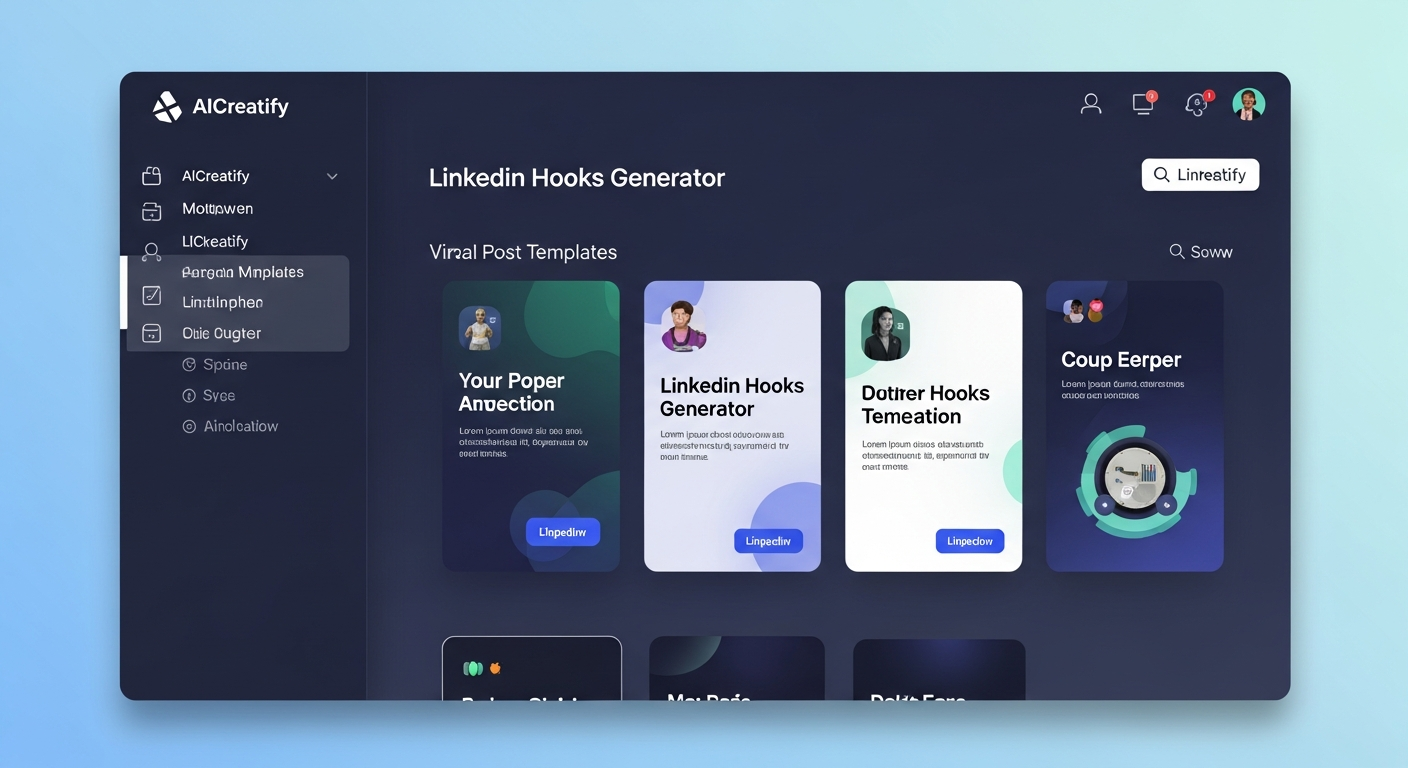
You can feed it prompts like: “Generate 3 LinkedIn hooks for a pre-seed SaaS founder seeking investment. Focus on early traction and a surprising industry statistic that validates our market.” Or “Generate 3 LinkedIn hooks that highlight a major. Overlooked problem in [Your Industry] and hint at an AI-powered solution, positioning us as future leaders.” The output is often surprisingly good, giving you a strong starting point to refine with your own founder voice. And yeah, we use a tool like this at my company—it’s part of how we test ideas quickly. You should check out AICreatify’s LinkedIn Hooks for Founders tool if you want to give it a shot.
Campaign Time: Using AI-Powered Hooks to Land Your Pre-Seed Round
Let’s get tactical. Here’s a real use case for an early-stage founder using these strategies to attract investor interest for a pre-seed round.
Campaign Goal: Generate 10-15 qualified inbound leads (VCs, Angel Investors) for initial discovery calls within 4 weeks.
Target Audience: Angel investors, pre-seed VCs, strategic advisors focused on fintech SaaS for SMBs.
Product/Service: CashFlow AI — a B2B SaaS platform that uses AI to predict and improve cash flow for small and medium-sized businesses, solving a common pain point for these businesses.
Week 1: Strategy & AI-Powered Hook Generation
- Define Investor ICP: We’re looking for angels and VCs who invest in early-stage fintech, especially those with a focus on SMB solutions. They’re excited by defensible tech and clear ROI.
- Craft Core Narrative: Our pitch boils down to: “SMBs die from cash flow issues, not profitability. Our AI prevents this, and we’ve early pilot data showing 20% average cash flow improvement for our users.”
- AI Hook Brainstorming (using AICreatify):
- Prompt 1 (Data-Driven): “Generate 3 LinkedIn hooks for a pre-seed SaaS founder (CashFlow AI) seeking investment in fintech for SMBs. Focus on early traction and a surprising industry statistic that validates our market.”
- Output example: “Did you know 82% of small businesses fail due to cash flow issues? Our AI reduces that risk by proactively forecasting financial needs. Early pilot users cut working capital by 20%. DM for early access to our deck.” (Strong start, easy to adapt)
- Prompt 2 (Problem/Solution/Vision): “Generate 3 LinkedIn hooks that highlight a major, overlooked problem in SMB finance and hint at an AI-powered solution, positioning us as future leaders.”
- Output example: “SMB owners waste 15+ hours/week managing messy spreadsheets. We’re building the AI-driven CFO every small business deserves – predicting cash shortfalls before they hit. This is big.” (Good for attracting thought leaders and even early hires).
- Prompt 1 (Data-Driven): “Generate 3 LinkedIn hooks for a pre-seed SaaS founder (CashFlow AI) seeking investment in fintech for SMBs. Focus on early traction and a surprising industry statistic that validates our market.”
- Content Calendar: Plan 3-4 posts/week. Mix direct investment-focused posts with broader thought leadership on SMB financial health.
Week 2-3: Content Creation, A/B Testing & Distribution
- Draft Full Posts: For each hook, write a 300-600 word post.
- Hook: Your attention-grabber.
- Context: Elaborate on the problem or insight.
- Value: Offer genuine advice or a fresh perspective.
- Soft CTA: “DM me to learn more,” “Link in comments for a preview of our investor memo,” “Excited to connect with investors aligned with helping SMBs.”
- Visuals: A chart showing cash flow fluctuations (before/after with your solution), a short founder video explaining the problem, or a carousel post showing 3 key stats.
- Micro A/B Testing:
- Publish 2-3 posts with different hook styles on specific days.
- Track “see more” clicks, comments, and saves using LinkedIn’s analytics (or a tool like ShieldApp.ai if you’re serious about this).
- If the “82% of small businesses fail…” hook gets huge traction, lean into more data-driven hooks for your next posts. If the founder story about almost failing resonates, then double down there.
- Targeted Distribution:
- Direct Outreach: Identify 10-15 target investors each week. Engage with their content. Then, send a personalized connection request referencing a shared interest or their recent post.
- Network: Ask early advisors or friends to comment and share your posts, especially those connected to investors.
- Groups: Share relevant posts (sparingly, don’t spam) in founder or investor groups.
Week 4: Lead Nurturing & Improvement
- Engage: Respond to every comment, every DM. These are leads! Turn those conversations into booked calls.
- Measure ROI:
- Quantitative: Total impressions, “see more” CTR (aim for 25-35%+, that’s solid), engagement rate (likes + comments + shares / impressions—5%+ is excellent), qualified DMs, investor calls booked.
- Qualitative: Feedback from investors. Were your hooks clear? Did they understand your vision from your posts?
- Refine: What worked best? What fell flat? Use that intel for your next content push, whether it’s more investor outreach or building out your customer base.
Going Beyond the Hook: Ongoing Growth Tactics for Founders
A great hook is just the start. To truly dominate LinkedIn, you need a smart, ongoing strategy.
1. Build a “Hook Bank“
When you see a killer hook on LinkedIn, Twitter, or even a news headline, save it! Jot it down in Notion or a simple Google Doc. Tag it by type: #DataHook, #VulnerabilityStory, #QuestionHook. Then, when you’re stumped, review your bank. And here’s a neat trick: feed those successful types of hooks back into your AI writing assistant (like AICreatify) as examples. It helps the AI learn your style and generate even better, more tailored variations for you. It’s like teaching your digital apprentice.
2. The Visual “Scroll-Stop” Strategy
Honestly, text-only posts sometimes get lost. Pair your hooks with compelling visuals.
- Custom Graphics: Use Canva (or hire a designer) for branded graphics showing a key stat, a powerful quote, or a simple diagram of your solution.
- Short Videos: Seriously, record a 30-60 second video of yourself, founder-to-camera. Just talk about a problem, share an insight, react to industry news. These often outperform super polished, corporate videos. LinkedIn prioritizes native video uploads.
- Carousel Posts (Document): Turn a mini-case study, a quick guide, or key findings from a blog post into a multi-slide PDF document. These feel high-value and keep people on your post longer, signaling to LinkedIn that your content is good.
3. Smart Scheduling & Timing
Yeah, there are general “best times” (Tuesday-Thursday, 9 AM – 2 PM for most B2B). But your specific audience might be different. Use LinkedIn’s native analytics (or tools like Buffer) to see when your network is most active. Try posting at slightly off-peak times too—sometimes less competition means more eyeballs. Some founders I know swear by Sunday evening posts; they catch people planning their week.
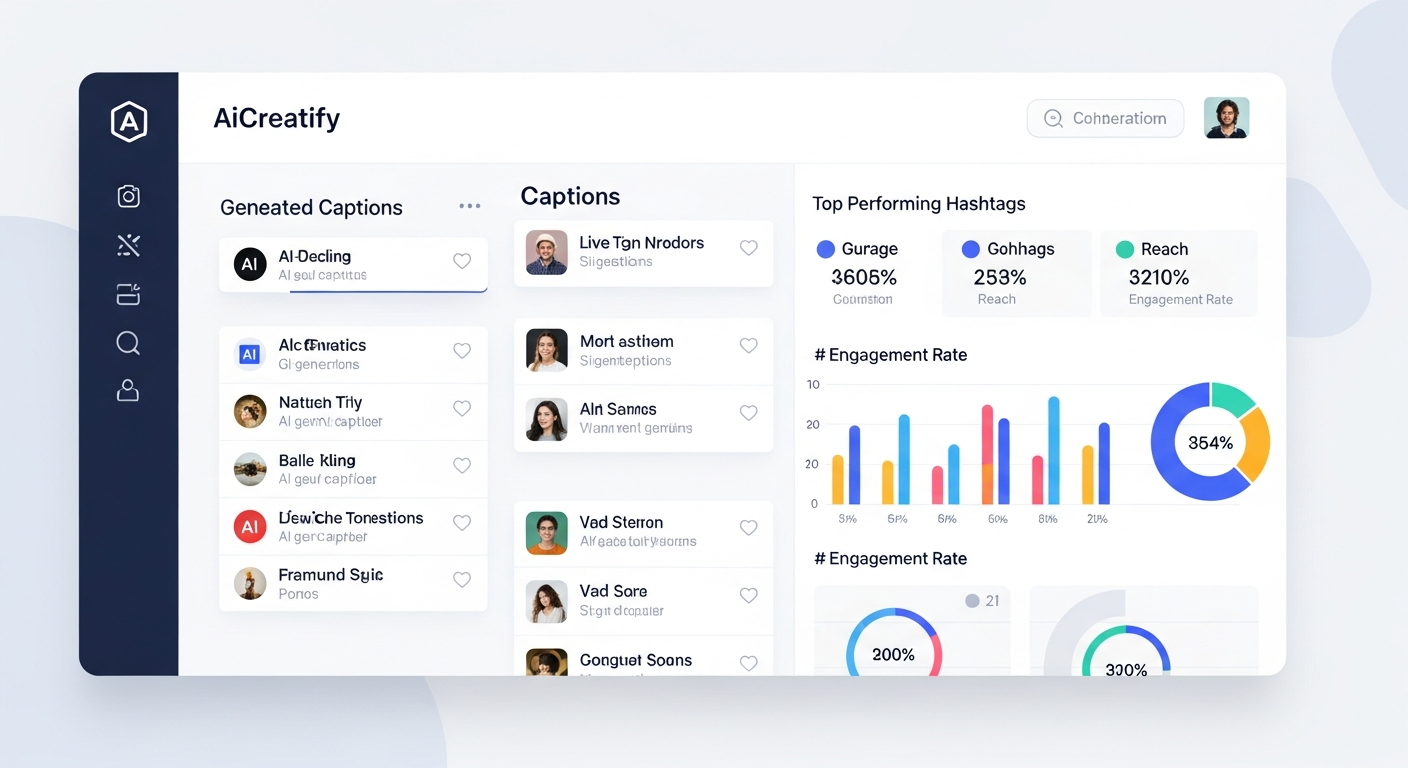
While we’re talking tools, don’t stop at LinkedIn. Your overall presence matters. My team loves tools that can help with Instagram Caption Generator and Hashtag Generator features, because a consistent brand message across platforms brings more inbound leads. The goal is to maximize your reach everywhere potential customers or investors hang out.
4. Comment-Driven Content
Your comments section isn’t just for replies; it’s a goldmine of content ideas! Pay attention to the questions people ask, the debates that ignite. These are direct signals of your audience’s biggest pain points and interests. Turn those questions into your next LinkedIn post hooks. This makes your content perpetually relevant and hyper-targeted.
5. “Dark Post” A/B Testing (The Advanced Move)
For super high-stakes content—a major product launch, a critical funding announcement, a lead magnet with a high conversion goal—consider running “dark posts.” These are basically ads you set up but don’t “publish” to your feed. Test 2-3 different hooks on a segmented audience with a small budget. The hook with the highest click-through rate? That’s your winner. Use that winning hook for your organic post to maximize its impact from the get-go. It’s a low-cost way to reduce risk and seriously amplify your reach.
Frequently Asked Questions About LinkedIn Hooks for Founders
Q: How long should my LinkedIn hook be?
Keep it punchy, aiming for 1-3 lines or ideally under 200 characters to ensure it’s fully visible before the “see more” button. Your hook needs to deliver that first striking thought, stat, or urgent question immediately. This brevity is crucial for grabbing attention in a scroll-heavy feed.
This one’s underrated.
Q: Should I use emojis in my LinkedIn hooks?
Yes, absolutely! Emojis can add visual interest, break up text, and convey tone, helping your message stand out. Use them sparingly and strategically to highlight key points or add personality without appearing unprofessional.
Q: Is it okay to use controversial hooks?
It depends on your brand and audience. Controversial hooks can generate massive engagement and make you stand out, but they also risk alienating some of your audience. Be authentic to your voice and vision; if you genuinely hold a strong, contrarian opinion that serves your audience, then go for it, but avoid shock value alone.
Q: What’s the biggest mistake founders make with LinkedIn hooks?
The biggest mistake founders make is trying to be everything to everyone or sounding too corporate and hiding behind jargon. They often forget they’re people speaking to other people, where personality and authentic struggles build real connections. Never start with a dull intro; always get straight to the point to capture immediate interest.
Ready to ditch the vanilla posts and start growing?
Look, building a startup is hard enough. Don’t make your marketing harder than it needs to be by letting good content die a silent death behind a bland hook. Your LinkedIn presence as a founder is a vital asset for funding, talent, and customers. It’s time to treat it like one.
Stop scrolling, start hooking. Go make some noise.
About Author
Susha Kanaujia
Product Manager and AI enthusiast with 16+ years of experience in technology and digital products.
Is Your LinkedIn Profile Holding You Back?
Get an instant AI audit of your headline, About section, and keywords. Discover exactly what recruiters see and get 1-click Before & After rewrites to rank higher in searches.
+42% Recruiter Views predicted if you fix 3 keyword gaps.
🚀 Enjoying AICreatify?
We'd love your support on Product Hunt. ❤️ Upvote us and share your feedback.