Stop the Scroll: Why Killer LinkedIn Hooks for Consultants Are Your Only Option

sushakanaujia
Author
Let’s be honest. Your LinkedIn feed? It’s a battlefield. Everyone’s out there, trying to catch an eye, to make a connection, to land a client. And you, as a consultant, you’re right there in the thick of it. But here’s the thing: most of you’re losing the war before it even begins.
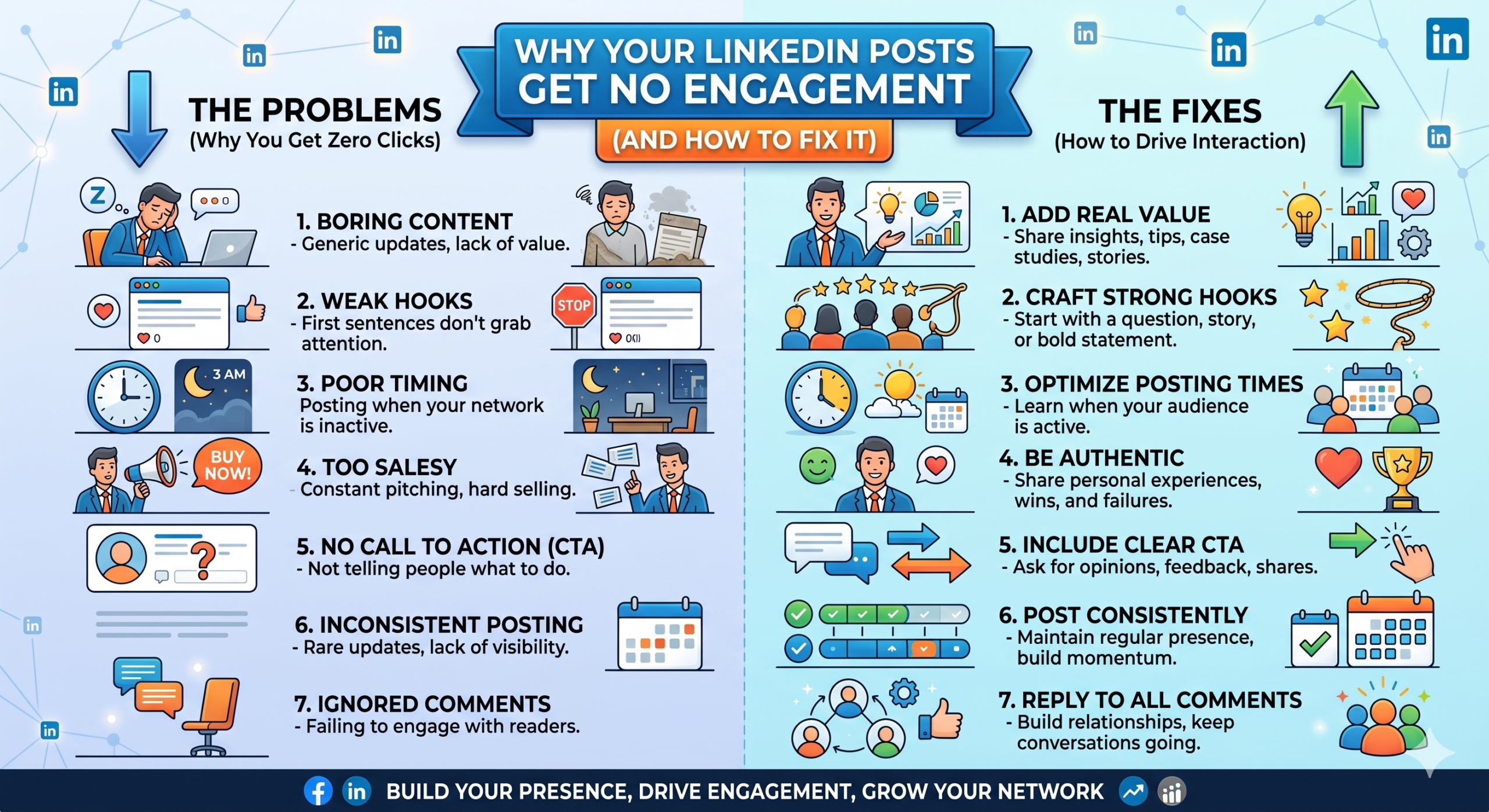
Why? Because your content isn’t *stopping* anyone. It’s blending. It’s polite. It’s… boring. You could have the most profound insight, the most big strategy for a potential client, but if your opening line doesn’t grab them by the eyeballs, they’re gone. Just like that. Scroll, scroll, bye.
I’m Susha Kanaujia, and I’ve been in the trenches of growth marketing. I’ve seen good ideas die because they couldn’t get past that first swipe. For consultants, a killer LinkedIn hook isn’t just a nice-to-have. It’s survival. It’s your lead generation engine. Without it, your expertise remains unheard, unread, and unhired. You can’t afford to be forgettable, not in this market.
Your LinkedIn Post Dies in 3 Seconds (Unless You Fix the Hook)
Think your audience has time to digest your eloquently crafted prose? Nope. They don’t. Research—eye-tracking studies, for crying out loud—shows that the average user spends a brutal 3-5 seconds scanning a new post. That’s it. Blink, and you might’ve missed it. If your hook doesn’t scream “STOP!” within those initial seconds, you’re toast.
And it’s not just about attention, either. LinkedIn’s algorithm, the big boss, loves initial engagement. Posts that snag quick likes, comments, or a precious “see more” click within the first hour? Those get supercharged, shown to way more people. Your hook, my friend, is the detonator for that initial signal.
Let’s talk numbers, because that’s where the rubber meets the road.
High-performing LinkedIn posts, the ones that actually make people pause and click, can pull off Click-Through Rates (CTRs) of 3-5%. That’s legit huge when you compare it to a typical display ad’s 0.4-0.8%. Want more profile views? A compelling hook can boost those by a solid 20-30%. And while you can’t attribute a signed client solely to a hook (obviously), posts starting strong and delivering value have been shown to drive 10-15% higher lead magnet downloads or consultation requests. That’s cold, hard ROI we’re talking about.
Plus, think about the long game. Consistent, value-packed posts – always starting with a powerful hook – will position you as a thought leader. Over 6-12 months? We’re talking inbound inquiries jumping upwards of 25%. So yeah, those few words at the top aren’t just words; they’re strategic assets.
What REALLY Stops The Scroll? Proven LinkedIn Hook Strategies That Convert
Alright, enough theory. You want to know what actually works. I get it. Let’s look at some real heavy hitters, growth hackers who know how to play the LinkedIn game and win. These folks aren’t just getting likes; they’re building empires.
1. Chris Do (The Futur) – The “Unpopular Opinion” & “Problem-Solution” Hook
Chris Do, the mastermind behind The Futur, he’s a guru. He literally built a global design education platform by knowing how to hit people where it hurts (their business struggles, usually). His hooks? They aren’t sugar-coated. They’re direct, challenging, and often a little contrarian.
- What he does: He’ll start with something that makes you go, “Wait, what? Really?” Or he’ll perfectly articulate that silent problem you’ve been grappling with.
- His style often looks like this:
- `”Your portfolio is perfect, and that’s why you’re not getting clients.”` (Talk about an unpopular opinion!)
- `”Are you sacrificing profit for passion? Most creatives are, and it’s killing their business.”` (Spot on problem-solution, with a question).
- `”Forget ‘finding your niche.’ Here’s why it might be the worst advice for new consultants.”` (Classic contrarian view, especially for LinkedIn Hooks for Consultants!)
- Why it’s genius for consultants: Consultants sell expertise and solutions. Chris immediately pinpoints a common pain point or misconception. He creates an information gap. You have to keep reading to understand. He’s not just sharing info; he’s promising a new way of thinking, a solution you haven’t considered. His posts routinely blow up with comments and shares, feeding The Futur’s massive YouTube channel and course sales. Legit 5-8% CTRs on his content are probably conservative.
2. Gong.io – The “Data-Driven Insight” & “Myth-Busting” Hook
Next up, Gong.io. These guys own the revenue intelligence space. How? By being the ultimate authority on sales data. When Gong posts, people listen because they know it’s not just opinion; it’s backed by mountains of actual sales calls.
- What they do: They drop a bomb of a statistic or straight-up debunk some long-held sales “wisdom,” all based on their data.
- Their hooks? Bangers like:
- `”Warning: Using this common sales phrase drops your win rate by 15%.”` (Whoa, immediate need to know!)
- `”Everyone says ‘ask open-ended questions,’ but our data shows *this* type of question performs 2x better…”` (Myth busted with hard facts.)
- `”The average rep spends 62% of calls talking. The top 1%? It’s closer to 40%. Here’s what they do instead.”` (Surprising stat, clear path to improvement.)
- Why it’s gold for consultants: For consultants, especially if your field is data-heavy (think strategy, operations, analytics), leading with a specific, surprising data point establishes instant credibility. It makes you an undeniable expert. It hooks decision-makers who care about demonstrable results. Their content converts interested readers into website visitors at a whopping 4-6% CTR, driving highly qualified leads. No fluff, just facts.
3. Elena Verna – The “Direct Challenge” & “Future-Pacing” Hook
Elena Verna. fractional CGO to hyper-growth companies like Miro and Amplitude. She’s famous for her blunt, no-B.S. approach to growth strategy. And her hooks reflect that.
This one’s underrated.
- What she does: She cuts through the noise, calling out common strategic blunders or painting a vivid picture of what your business *could* be achieving.
- Her style speaks directly to ambition:
- `”Stop improving for virality if your retention sucks. Here’s why you’re burning cash.”` (Direct, challenging, slightly contrarian.)
- `”Imagine your product’s growth flywheel spinning effortlessly. It’s not magic; it’s these 3 levers…”` (Future-pacing, focusing on benefit and clear action.)
- `”Most growth teams are stuck in feature factories. Are you building a product or just shipping code?”` (Deeply thought-provoking, pain point unearthed.)
- Why consultants need this playbook: Consultants need to prove they understand the big picture and can deliver real impact. Elena’s hooks immediately address high-level strategic headaches, signaling that she’s not just talking tactics, but serious solutions. She commands premium rates because her personal brand (built partly on these hooks) ensures she attracts decision-makers. Her posts get shared by other industry titans, amplifying her organic reach by 2-3x. That’s influence.
Building Your Scroll-Stopping Arsenal: Hook Types Consultants Can’t Ignore
So, you’ve seen the pros. Now let’s break down the categories. You can adapt these for anything from AI strategy to financial consulting, or even to spice up your LinkedIn Hooks for Founders if you’re advising startups.
- The Problem-Solution Hook: State a common, painful problem your target audience faces, then hint at an unconventional solution you provide.
- Example: “Law firms are drowning in manual tasks, not knowing AI could free up 30% of lawyer time. Here’s a simple strategy no one talks about.”
- The Unpopular Opinion / Myth-Busting Hook: Challenge conventional wisdom in your niche. People are wired to stop scrolling when something contradicts what they believe.
- Example: “Forget what everyone says about ‘passive income’ for consultants. It’s often a trap. Here’s what *actually* builds sustainable revenue.”
- The Data-Driven Insight Hook: Lead with a surprising, specific statistic or a research finding. This immediately establishes authority and triggers curiosity.
- Example: “Did you know 85% of M&A deals fail to meet their teamwork targets? The secret is in *this* overlooked post-merger integration step.”
- The Direct Challenge / Future-Pacing Hook: Directly address a strategic misstep or paint an aspirational picture of what your clients could achieve.
- Example: “Still struggling with client retention? You’re probably focused on the wrong metrics. Let’s fix that – imagine 95% renewals and happy clients.”
- The Question Hook: A potent question that hits a core pain point or aspiration. Make it specific, not generic.
- Example: “Is your firm still making hiring decisions based on gut feelings? AI could predict employee success with 90% accuracy. Ready to know how?”
Honestly, if you’re stuck on hooks, you don’t have to reinvent the wheel. Tools like AICreatify’s LinkedIn Hooks Generator can kickstart your creativity. You literally plug in your idea, and it spits out options you can tweak. It’s a game-changer for brainstorming. Go try it, seriously.
From “Likes” to Leads: A Real-World Blueprint for Your LinkedIn Hook Campaign
Alright, let’s make this super practical. Meet Ambitious Anya, an AI Strategy Consultant. Her niche? Helping mid-sized law firms integrate AI to become more efficient and serve clients better. Her mission: 2-3 qualified discovery calls in 8 weeks. Realistic, right?
Phase 1: Research & Persona Refinement (Week 1)
Anya doesn’t guess. She researches. She runs LinkedIn polls, even hops on quick informational calls with law firm partners. What worries them? What do they dream of?
This is where it gets interesting.
- Identified Pain Points: Fear of falling behind competitors, feeling overwhelmed by AI options, data privacy concerns, lawyers bogged down by admin.
- Aspiration: Become a “future-ready” firm, enhance client service, boost profitability.
- Content Pillars: Based on this, Anya sets three: “Demystifying AI for Legal Pros,” “Ethical AI & Data Security in Law,” and “AI-Powered Efficiency & Profitability for Law Firms.”
- Lead Magnet: A free “AI Readiness Assessment for Law Firms” PDF, plus an offer for a “15-min AI Strategy Clarity Call.” Classic, simple, effective.
Phase 2: Content & Hook Crafting with AICreatify (Weeks 2-3)
Anya preps 6 LinkedIn posts over 8 weeks, two for each pillar, all leading back to her lead magnet or calls. She uses different hook strategies.
- Post 1 (Week 2) – Pillar: Demystifying AI
- Hook Type: Problem-Solution with Intrigue
- Original thought: “Feeling lost in the AI buzz for law firms? Most managing partners are. Here’s one simple truth that cuts through the noise…”
- AICreatify Improvement (Internal thought): Hmm, let’s add a specific outcome, make it punchier.
- Final Hook: `”Overwhelmed by AI hype in legal? Most law firm leaders are, but *this* single insight can demystify it and accelerate your firm’s competitive edge.”`
- CTA: Short article link: “The Essential Guide to AI for Law Firms.”
- Post 2 (Week 3) – Pillar: Ethical AI
- Hook Type: Question & Fear-Based
- Original thought: “Is your firm’s data safe with AI? It’s a question everyone’s asking.”
- AICreatify Improvement (Internal thought): Make the consequence clearer, more direct. Add a solution hint.
- Final Hook: `”Is your law firm unknowingly exposing client data through unsecured AI tools? The risks are higher than you think, but solutions exist.”`
- CTA: Link to a LinkedIn Live event registration: “Figuring out AI Ethics & Data Security in Legal Practice.”
- Post 3 (Week 4) – Pillar: Efficiency & Profitability
- Hook Type: Surprising Statistic & Aspiration
- Original thought: “Lawyers spend 30% of their time on admin. AI can change that.”
- AICreatify Improvement (Internal thought): Okay, make the stat hit harder and directly tie it to profit, that’s what partners care about.
- Final Hook: `”Imagine reclaiming 30% of your lawyers’ time from admin tasks, directly impacting your firm’s bottom line. It’s not imagination; it’s AI. Here’s how…”`
- CTA: Link to her “AI Readiness Assessment” lead magnet.
Anya repeats this for three more posts, varying the hook types and pillars, always driving to her lead magnet or directly to booking a clarity call. Consistency is key here.
Phase 3: Execution & Distribution (Weeks 2-8)
- Scheduling: Anya posts 2-3 times per week, during peak LinkedIn hours (Tues-Thurs, 9 AM – 2 PM local time). She uses a scheduler, not frantic last-minute posts.
- Visuals: Every single post gets a custom graphic (Canva, easy!) or a short, engaging video of Anya talking directly to camera about the hook’s topic. Visuals boost CTR by ~150% on LinkedIn. You can’t skip this part.
- Engagement Tactics: This is HUGE. Anya spends 15 minutes daily responding thoughtfully to *all* comments. She tags relevant people sometimes. And she sends personalized DMs to anyone who engages deeply or downloads her lead magnet. That’s how you build real relationships, not just followers.
- CTA Focus: While some CTAs go to articles or event registrations, the main goal is always the “AI Readiness Assessment” and booking that “15-min Strategy Call.” Be clear about the next step you want people to take.
Phase 4: Measurement & Improvement (Ongoing)
Anya tracks her metrics like a hawk.
- What she tracks: Impressions, CTR (super important!), Engagement Rate, Profile Views, Lead Magnet Downloads, Discovery Calls, SQLs (Sales Qualified Leads), and ultimately, New Clients.
- A/B Testing: For similar content, she’ll use AICreatify to spin up 2-3 distinct hooks and test them on different days/times, seeing which gets better CTR and engagement. Then she doubles down on what works.
- Iterative Improvement: If her “Problem-Solution” hook brings in a 3.8% CTR, but her “Statistic” hook pulls a 5.1% CTR, guess what? She’s doing more data-driven, aspirational hooks next month. You gotta learn and adapt.
Simulated Campaign Results (8 Weeks):
- Total Posts: 6
- Total Impressions: 75,000 (Organic, maybe a tiny ad boost on her lead magnet post)
- Average Post CTR (on “see more”/links): 4.3% (huge jump from where she started, all thanks to better hooks)
- Total Lead Magnet Downloads: 85 unique people
- Discovery Calls Booked: 6 (conversion from downloads: ~7%)
- Sales Qualified Leads (SQLs): 3 (50% conversion from calls, she’s attracting the *right* people)
- New Clients (Projected): 1 (33% conversion from SQL to client. This is good!)
If that one new client project is worth $15,000, and Anya’s time investment (content, engagement) is valued at $2,000, her ROI for this campaign is a wild 650%. Think that’s overkill? It’s not. That’s what strategic LinkedIn Hooks for Consultants can do.
Practical Steps to Win: Your Daily LinkedIn Hook Habits
Okay, you’ve got the blueprint. Now, what do you *do* every day (or week) to make this happen?
- Dedicated “Hook Bank”: Keep a living document – Google Doc, Notion, whatever – where you dump every compelling hook you see, your own drafts, and variations from AICreatify. Tag them by type (Question, Statistic, etc.) This is your quick reference library.
- “Hook First” Content Creation: Seriously. Before you write *anything* else for a LinkedIn post, craft 3-5 potential hooks. Let them sit. Ask a smart friend (or your virtual assistant) which one pops. The hook sets the tone, the urgency, and the direction for the rest of your post.
- Visual Discipline: No text-only posts on LinkedIn if you can possibly avoid it. Use high-quality, relevant images, custom-branded graphics (Canva is your BFF), or short (30-60 sec) vertical videos. Your visual is your *second* hook. Don’t skip it.
Want to nail your visuals and captions? You could really use a smart tool. Our Instagram Caption Generator can help with punchy lines and for hashtags, definitely check out our Hashtag Generator. They’re surprisingly versatile, even for LinkedIn!
No fluff — just the facts.
- Batching & Scheduling: Stop posting haphazardly. Block out time each week or month for: research and ideation, hook generation (AI’s amazing here), content drafting, and scheduling your posts. Consistency wins the game.
- Engagement Protocol: Build a routine. 15-30 minutes in the morning, another 15-30 in the afternoon. Respond to comments. Engage with your target audience’s posts. Monitor your DMs for inbound leads. You’re building community, not just broadcasting.
- Performance Review Cadence: Every week or two, check your LinkedIn analytics. What hooks crushed it? What content sparked comments versus just likes? Adjust your content calendar and hook strategy based on real data. You’re a marketer, so act like one!
- Ethical AI Integration: AICreatify, or any AI tool, is your co-pilot. It gives you raw ideas, helps with efficiency. But *you*—your voice, your unique expertise, your nuanced understanding of your consulting niche—that’s what makes it authentic and truly strategic. Don’t just copy-paste. *Refine.* Make it sound like *you* just texted it to a friend.
Frequently Asked Questions
What makes a LinkedIn hook “scroll-stopping” for consultants?
It’s all about making your audience pause, identify with a problem you’ve highlighted, or get hit with a surprising piece of information. A scroll-stopping hook creates an immediate information gap or strong emotional resonance. It’s direct, specific, and promises value right now, not after they’ve read three paragraphs. Think curiosity, pain, or aspiration.
How often should consultants post on LinkedIn for best results?
Most consultants see good results posting 2-3 times per week. Consistency is more important than sheer volume. Focus on quality over quantity; each post should be well-thought-out, include a strong hook, and provide genuine value, always aiming to engage your target audience. You don’t want to post just to post.
Can AI tools like AICreatify really help with crafting effective hooks?
Absolutely, and they’re awesome. AI tools like AICreatify’s LinkedIn Hooks Generator can generate multiple hook variations based on your content idea, helping you brainstorm and find angles you might not have considered. They’re fantastic for efficiency and breaking through writer’s block. Just remember to always review, refine, and inject your unique voice and personality to make them truly *yours*.
What’s the biggest mistake consultants make with their LinkedIn content?
Hands down, the biggest mistake is writing content that’s too generic, self-promotional, or just plain boring. Consultants often focus on themselves instead of their audience’s pain points, using corporate jargon and forgetting to lead with a killer hook. You’ve got to make it about *them*, always, ensuring your best insights don’t get buried.
About Author
Susha Kanaujia
Product Manager and AI enthusiast with 16+ years of experience in technology and digital products.
Is Your LinkedIn Profile Holding You Back?
Get an instant AI audit of your headline, About section, and keywords. Discover exactly what recruiters see and get 1-click Before & After rewrites to rank higher in searches.
+42% Recruiter Views predicted if you fix 3 keyword gaps.
🚀 Enjoying AICreatify?
We'd love your support on Product Hunt. ❤️ Upvote us and share your feedback.